Excavation work in Saskatoon demands a thorough understanding of the region's complex subsurface conditions, where glacial history has left behind a challenging mix of soils. This category encompasses the full spectrum of geotechnical solutions required to safely and efficiently execute any project that disturbs the ground, from initial site characterization and design to real-time construction monitoring. The importance of specialized excavation expertise here cannot be overstated, as the native tills, lacustrine clays, and meltwater sands present distinct behaviors that directly influence shoring design, dewatering strategies, and overall stability. Engaging a geotechnical team early in the planning process is the most effective way to mitigate the inherent risks of ground movement, utility damage, and structural settlement that are common in this geological setting.
Saskatoon's subsurface is dominated by thick deposits of glacial till and the highly plastic, often soft clays of the Bearpaw Formation. These cohesive soils can be particularly treacherous for deep excavations due to their potential for long-term creep and swelling when unloaded. The presence of buried pre-glacial valleys filled with sand and gravel aquifers introduces significant groundwater management challenges, requiring robust dewatering and cutoff wall systems. A successful project hinges on detailed geotechnical analysis for soft soil tunnels, even for open-cut excavations, to predict how these sensitive materials will react to stress changes. Understanding the local stratigraphy, which often features interbedded layers of varying permeability, is fundamental to preventing costly delays and ensuring worker safety at the bottom of any cut.
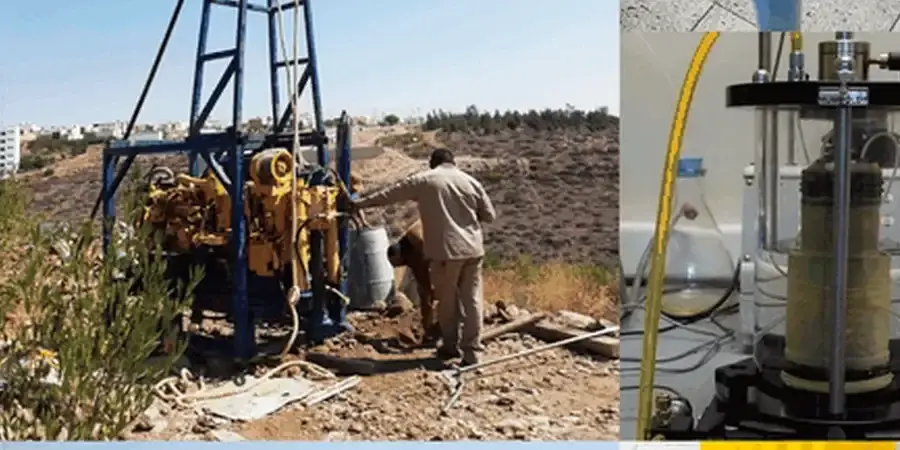
All excavation projects in Saskatchewan must comply with stringent provincial regulations, primarily the Occupational Health and Safety Regulations, 2020, which mandate specific requirements for trenching, shoring, and ground support. These rules define soil classification types and outline the conditions under which a professional engineer must design a temporary protective structure. For any excavation deeper than 4 metres, or where unstable ground is identified, a sealed design from a licensed geotechnical engineer is non-negotiable. This legal framework makes solutions like geotechnical design of deep excavations a critical component of project approval, ensuring that shoring walls, tiebacks, and bracing systems are engineered to withstand both earth and hydrostatic pressures, as well as adjacent surcharge loads from traffic and existing buildings.
The scope of projects requiring this category of solutions is broad, ranging from downtown high-rise foundations and underground parkades to major infrastructure like the city's trunk sewer upgrades and river crossing approaches. The installation of deep utilities, lift stations, and bridge abutments all demand a sophisticated excavation plan to navigate Saskatoon's challenging interface between soil and the South Saskatchewan River. For trenchless methods, the risks are equally high, making pre-construction assessment vital. Regardless of the technique, a robust geotechnical excavation monitoring program is essential to validate design assumptions and supply early warning of excessive ground movement, protecting adjacent structures and public safety. This integrated approach, from design through observation, defines the modern standard of care for any excavation in the city.
Quick answers
What are the key geotechnical risks associated with deep excavations in Saskatoon?
The primary risks stem from the highly plastic clays of the Bearpaw Formation and water-charged glacial deposits. Key issues include basal heave due to unloading, excessive lateral movement of shoring walls from swelling pressures, and sudden instability from uncontrolled groundwater inflow into sand lenses. Managing these requires a design that accounts for both short-term construction loads and long-term soil creep.
At what depth is a professional engineer's design required for an excavation in Saskatchewan?
Under the provincial Occupational Health and Safety Regulations, an engineered shoring design is mandatory for any excavation deeper than 4 metres. It is also required for shallower excavations if the ground is classified as unstable, if there are surcharge loads from adjacent structures or traffic, or if the trench walls are not sloped to a safe angle.
How does the local geology affect the choice of excavation support system in Saskatoon?
The interbedded nature of tills and soft clays often necessitates rigid support systems like soldier pile and lagging walls or secant pile walls to limit deformation. The high groundwater table in buried valleys frequently requires watertight systems or extensive dewatering. The choice between cantilever, anchored, or braced systems is dictated by the soil's low shear strength and sensitivity to disturbance.
Why is continuous monitoring considered essential during excavation projects in this region?
Monitoring is essential because the behavior of glacial tills and clays during unloading can deviate from initial predictions. Real-time data on wall deflection, groundwater levels, and adjacent settlement allows engineers to verify the design's performance and implement contingency measures immediately. This observational approach is a regulatory expectation and a critical safeguard against sudden failures.