The National Building Code of Canada requires clear subsurface hydraulic data before any major excavation or foundation design. In Saskatoon, that means dealing with the complex layering of glacial till, interbedded sands, and silt lenses left by the Wisconsinan glaciation. A standard borehole log gives you soil type; a field permeability test gives you the actual flow rate. We run both the Lefranc method in granular soils and the Lugeon test in fractured bedrock, producing numbers you can use directly in a dewatering plan or a seepage model. Without this data, contractors on Circle Drive or the South Saskatchewan River banks run into water faster than a backhoe can dig. Our team has handled these conditions from the Blairmore Suburban Centre to industrial lots in the Marquis Industrial Area, always calibrating results against the local stratigraphy.
A single Lugeon test in fractured bedrock tells you more about water inflow than a hundred lab perm tests on intact core.
Technical details of the service in Saskatoon
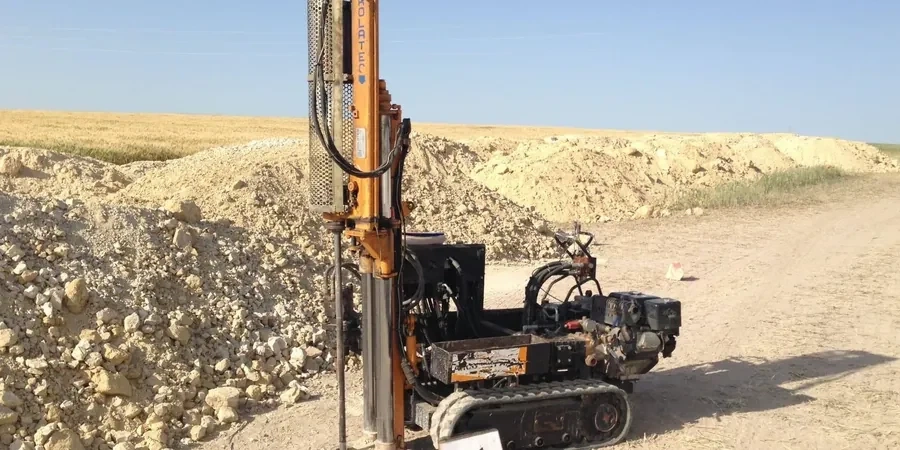
Typical technical challenges in Saskatoon
Saskatoon grew up fast around the rail yards and the river, and a lot of the early 20th-century development didn't account for the perched water tables we map today. In neighborhoods like Nutana and Riversdale, old basements sit in what is essentially a seasonal groundwater channel. When someone proposes a new infill project with a deeper crawlspace or a commercial building, we step in with field permeability testing to predict what the shoring and dewatering system will actually face. Ignoring this step means sump pumps that can't keep up, flooded footings, and silt-laden water eroding the base of your excavation. In the silty sands common west of Idylwyld Drive, the risk of quick conditions and internal erosion is real. A Lefranc test helps us design a filter or a cutoff that works with the local gradient, not against it.
Our services
Our field solutions are designed to deliver actionable numbers, not just a PDF report. We usually run these tests as part of a wider geotechnical investigation, and we handle the logistics from start to finish.
Lefranc Permeability Testing
Constant and falling head tests in boreholes through overburden soils. We target specific strata—sand lenses, gravel zones, or the weathered till contact—to give you a vertical profile of hydraulic conductivity. Data feeds directly into PLAXIS or SEEP/W models.
Lugeon (Packer) Testing in Rock
Multi-stage pressure testing in bedrock cores using pneumatic packers. We measure the water take at each pressure step and interpret the flow regime (laminar, turbulent, dilation, washout). Essential for tunnel alignment and deep shaft design.
Top questions
How much does a field permeability test cost in Saskatoon?
For a Lefranc or Lugeon packer test, the price typically ranges from CA$840 to CA$1,390 per test interval, depending on depth, rig setup, and whether it is a standalone callout or part of a larger drilling program. A project with multiple test intervals usually sees a lower unit cost.
Which test should we use in glacial till, Lefranc or Lugeon?
In the unsorted glacial till around Saskatoon, the Lefranc test is almost always the right call. It handles the mix of clay, silt, and sand well. We only switch to a Lugeon setup when the till is very stiff, overconsolidated, or when we cross into the underlying fractured shale bedrock.
How long does a single test interval take in the field?
Once the borehole is advanced and the test section is isolated, a standard constant-head Lefranc test usually stabilizes in 30 to 60 minutes. A multi-stage Lugeon test in rock, running through five pressure steps, takes about 90 minutes to two hours to complete from setup to breakdown.
Can you run these tests through hollow-stem augers?
Yes, we routinely perform Lefranc tests through hollow-stem augers. The auger acts as a casing, and we advance the test tip below the bit. This method works well in the sandy silts found north of the city and avoids hole collapse during the test.