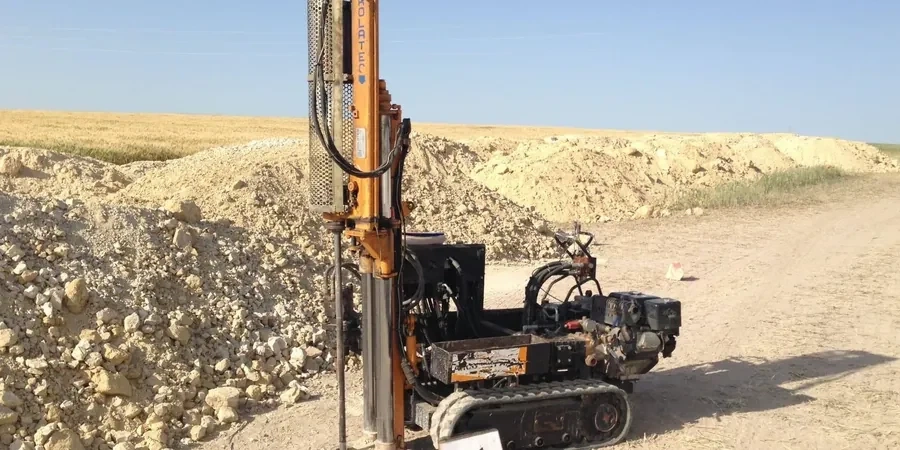
In-situ geotechnical testing forms the cornerstone of reliable foundation design and earthwork quality assurance in Saskatoon. This category encompasses a suite of field-based investigative methods that evaluate soil and aggregate properties directly in their natural, undisturbed state, rather than relying solely on laboratory analysis of extracted samples. From assessing compaction levels beneath roadways to verifying the bearing capacity of glacial till for commercial buildings, in-situ tests deliver immediate, actionable data that reflects real ground behaviour. For engineers and contractors across the city, these methods bridge the gap between theoretical design assumptions and the complex subsurface reality shaped by the South Saskatchewan River valley.
Saskatoon's subsurface conditions present unique challenges that make in-situ testing particularly valuable. The city is underlain by thick deposits of glacial till, a dense mixture of clay, silt, sand, and boulders left by retreating ice sheets, often overlain by post-glacial lake sediments and river valley alluvium. These heterogeneous soils can vary dramatically over short distances, with pockets of soft lacustrine clay or loose sand lenses hidden within otherwise competent till. Performing a field density test using the sand cone method allows technicians to verify that engineered fills meet specified compaction criteria despite this natural variability, preventing differential settlement in structures built on these variable deposits.
Regulatory compliance in Saskatchewan is governed primarily by provincial standards and municipal specifications. The City of Saskatoon's Infrastructure Design and Construction Standards reference the Saskatchewan Ministry of Highways specifications, which in turn align with national ASTM and CSA test methods. For instance, field density testing for municipal roadworks must adhere to ASTM D1556 for the sand cone method, while the CSA A23.2 series governs concrete and aggregate field evaluations. These standards ensure uniformity in testing procedures and acceptance criteria, giving stakeholders confidence that in-situ results are legally defensible and technically sound, whether for a residential subdivision or a major bridge abutment.
The range of projects requiring in-situ testing in Saskatoon is broad. Residential developers rely on compaction testing for basement backfills and garage slabs to prevent frost heave issues common in the region's freeze-thaw cycles. Commercial and institutional buildings, such as the University of Saskatchewan's expanding campus, require plate load tests and cone penetration testing to confirm foundation design parameters in glacial till. Infrastructure projects, including Circle Drive extensions and water treatment plant upgrades, depend on rigorous field density verification to ensure long-term pavement performance and structural integrity under heavy traffic and seasonal temperature extremes.
Available services
Quick answers
What is in-situ testing and why is it preferred over laboratory testing alone?
In-situ testing evaluates soil properties directly in the ground without removing samples, preserving natural stress states, moisture conditions, and fabric. Laboratory tests on disturbed samples can misrepresent field behaviour, especially in sensitive glacial clays or loose sands common in Saskatoon. Methods like the sand cone density test supply immediate, representative results that better reflect actual construction conditions.
Which in-situ tests are most commonly required for construction projects in Saskatoon?
Field density testing using the sand cone or nuclear gauge methods dominates compaction quality control for fills and backfills. For deeper investigations, standard penetration tests and cone penetration tests characterize the glacial till and river valley sediments. Plate load tests may be specified for heavily loaded foundations, while vane shear tests assess the strength of sensitive lacustrine clays found in some areas.
How do Saskatoon's soil conditions affect in-situ testing procedures?
The city's glacial till contains cobbles and boulders that can obstruct penetration testing equipment, requiring careful site selection and sometimes pre-drilling. Seasonal groundwater fluctuations in the river valley and swelling potential of certain clay units must be considered when interpreting test results. Test standards from the City of Saskatoon and Saskatchewan Ministry of Highways specify adaptations for these local conditions.
What qualifications should I look for in a provider of in-situ testing services?
Technicians should hold relevant CSA or ASTM certifications and demonstrate familiarity with Saskatchewan's specific standards, including City of Saskatoon specifications. background with local glacial till and post-glacial deposits is essential for accurate interpretation. Look for firms that maintain calibrated equipment, carry professional liability insurance, and can supply references from similar projects in the Saskatoon region.