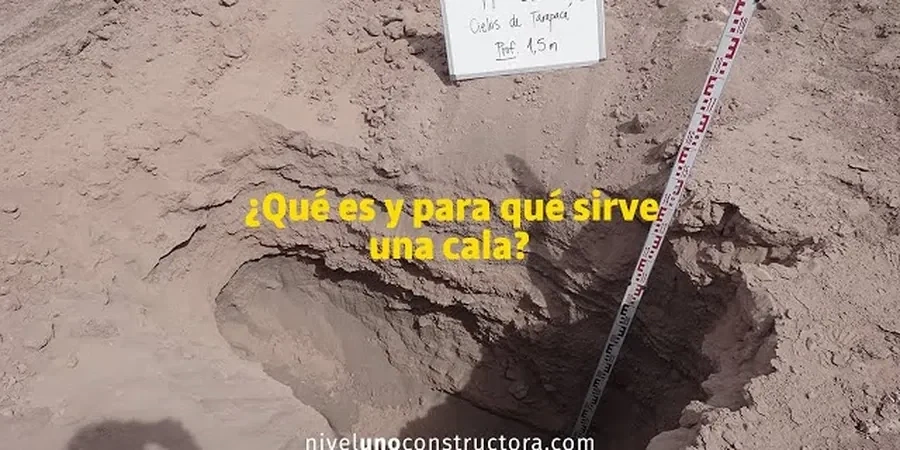
Ground conditions shift dramatically from the dense, overconsolidated glacial till of the Sutherland area to the alluvial sands and silts closer to the South Saskatchewan River near Nutana. A foundation design that works on the Floral Formation till east of Circle Drive can run into trouble where the river has reworked the landscape, leaving layered deposits of varying density and cementation. An exploratory test pit provides the most direct window into these subsurface transitions. When borehole samples are disturbed or a CPT cone refuses on a cobble, a test pit lets the geotechnical engineer walk right up to the exposure, measure strata thicknesses, and collect undisturbed block samples for triaxial strength testing without the guesswork. In Saskatoon, where the glacial stratigraphy includes everything from boulder-rich lodgement till to soft glaciolacustrine clays, this kind of visual confirmation is invaluable.
A single well-logged test pit in Saskatoon's variable till can replace three borings when the goal is to confirm bearing stratum continuity and depth to groundwater.
Technical details of the service in Saskatoon
Procedure video
Typical technical challenges in Saskatoon
Saskatoon's expansion since the 1950s has pushed development onto the riverbank slopes and into areas where historical backfill—often undocumented—covers the original prairie surface. A test pit reveals these conditions before they become a construction surprise. Ignoring a pit program where fill thickness is unknown invites differential settlement when footings straddle the boundary between compacted native till and loose, rubble-filled depressions. In the City Park and Riversdale areas, century-old utility trenches and buried foundations create hidden weak zones that only direct exposure can map reliably. The consequence of bypassing this stage ranges from cracked partition walls in a residential block to outright bearing failure under a loaded column. The Saskatchewan Ministry of Highways accepts pit-derived strength parameters for design, provided the logging and sampling follow a recognized standard, which is why our documentation chain meets the traceability requirements of ISO 17025.
Our services
Each exploratory test pit in the Saskatoon area is planned to answer a specific question about the site, whether it concerns bearing capacity, slope stability, or construction dewatering. Our technical team integrates the findings with laboratory testing to deliver a complete geotechnical picture.
Bearing Capacity Verification
Direct measurement of till consistency and density at footing elevation to validate presumptive bearing values under NBCC, reducing reliance on conservative assumptions.
Slope Stability Reconnaissance
Pits excavated on riverbank setbacks to identify slickensided clay surfaces, perched water tables, and softened zones that control the stability of valley-side development.
Utility and Fill Delineation
Mapping the lateral extent and composition of buried fill, old basements, and service trenches in Saskatoon's older neighborhoods to guide excavation support and foundation deepening decisions.
Top questions
How much does an exploratory test pit in Saskatoon typically cost?
For a standard test pit in the Saskatoon area, you can expect a range of CA$790 to CA$1,180. The final figure depends on access conditions, required depth, number of pits, and whether laboratory testing on the recovered samples is included. A site visit confirms the exact scope.
What depth can a test pit reach in Saskatoon's glacial soils?
With a conventional hydraulic excavator, we typically reach 4.0 to 4.5 meters. Below that, the risk of instability in the unsupported walls increases, and we transition to a borehole program or specify a benched excavation with appropriate safety measures.
Is a test pit better than an SPT boring for foundation design?
They answer different questions. A test pit gives a continuous visual profile and lets us collect high-quality block samples where the till is stiff. An SPT boring provides blow counts and can go much deeper. On many Saskatoon jobs, one or two pits combined with deeper borings give the most complete dataset.